Showing posts with label Llamas. Show all posts

Tuesday, December 7, 2010

My Llama Pilgrimage: Part II

I’ve had a lot of different reactions from friends, acquaintances, and co-workers about my llama ownership. Some people express curiosity, some fascination, and some even make fun of me. In any case, I find that people always want to know more about what I’m doing with these curious creatures. How did you get in to llamas? What are they like? How many do you have? And, on and on the questions go. I already gave the history of how I started with llamas, but there is more. Besides the fact that I was hooked on them as pack animals, I found out that these animals suit my “style” as a person. I am a busy person with other interests and responsibilities in life besides llamas. I don’t need an animal that is high maintenance and hard to train. Llamas fit that requirement. In addition, I admire them for their strength, athleticism, intelligence, quiet disposition, and noble beauty. I think the characterization of “beauty” is where many people depart with me. A lot of people think they look funky or goofy. One friend laughs at me because to him all llamas are like the one featured in the movie, “Napoleon Dynamite.” That llama was caricaturized as a weird and crazed llama.

After my first pack trip with Pam I knew that I had to get more llamas to expand my packing abilities. I purchased a few more pack sets and went back to Sherri to see if she had any more llamas to sell. She worked up a deal with me to buy three llamas that she thought would be perfect for my interests. So, my next purchase was Angel, Cher, and Fancy Pants.

2010 Summer Packers: Apollo, Rainy, and Cher. These three provided a lot of joy for Pam and I on two pack trips this summer. The rest of the llamas were too pregnant or too young!

To this day, I think this was my best purchase. At first, though, it didn’t feel that way. None of these llamas had been trained and they were already ten years old. I have found that it is harder to train an older llama; I think we humans are the same!

The first day I met Cher at Sherri’s ranch I approached her with a saddle in my hands, intending to easily put it on her, but instead of cooperating with me she spit in my face, which only made me more determined to saddle her. When I finally got the saddle on her, but before I could get it secured, she bolted away and drug the partially secured saddle with her all the way back to her barn, about a quarter mile away. I never want to lose a fight with a llama, so I patiently brought her back to tie her up at the original location and after a while she settled down enough to accept the saddle. Cher is a nervous llama by nature, but with a few pack sessions she became my best packer. In fact, over the years she has been a great pack llama leader and has trained all my other llamas in bridge, log and water crossings. She’s tall and a hard packer with a gentle spirit. I later found out that she is a descendant of the great pack llama, Poncho Villa, who is highly thought of in breeder circles. I wish I could breed her, but she has never accepted any male I’ve tried to breed to her. Her sister, Angel, was a descent packer, but her body conformation kept her from performing as well as Cher.

Cher was our first great packer and at 16 years old she still the best and trains the youngsters. She will always have a special place in my heart.

The third llama in this purchase was Fancy Pants. She was hard to handle at first because she was so nervous, but I was far more interested in using her to begin my breeding program than trying to make her a packer. I figured the best and most cost effective way to build a pack team was to breed your own llamas. She is the best athlete that I have, but I never have been able to take her on a pack trip until this past year. I’ve tried to keep her pregnant and producing babies; that’s how highly I think of her body conformation and abilities. She has produced three beautiful llamas since I purchased her; Columbus, Aspen and Summit.

This is Fancy Pants on the Left and her one year old daughter Aspen on the right. Aspen will be a fine breeder and packer.

This is Fancy Pants with her most recent cria, Summit. Summit is now 6 months old and I have not seen better body conformation in a llama!

Columbus was Fancy’s first cria and our first cria! I bred her with one of Sherri’s studs, Canadian Mountain Man; a llama with an eager but gentle disposition, which is exactly what you want in a packer. Columbus was actually born on Columbus Day, so Pam appropriately named her. He quickly became our pride and pleasure. He was a beautiful llama with wonderful wool coloring and the most gentle disposition I have seen in any llama. He would right up to Pam and rub up against her, seeking her attention.

But, at six months something bad happened. About the time Columbus came of age to be weaned, at six months, I purchased a male stud by the name of Apollo. Apollo was two years old and was a fine llama in the lineage of the famous pack stud, Black Thunder. Pack Llama breeders often speak of Black Thunder with glowing expressions. Apollo had just come from a herd of 5 or 6 males who had all been fighting with each other, which is what llamas do, since they are always jostling for a position within the herd. So, when Apollo and Columbus were joined together it was a terrible match. A little six month old with a near full grown two year old! Apollo chased Columbus all over the field repeatedly tackling him. After a week together I came out to the field and found Columbus hiding in a black berry thicket, shivering. I gathered him up in my arms and took him to an isolation pen so that I could feed him and care for him. From that day on Columbus’ health declined rapidly. Within a week he died. At that time I wasn’t sure what had happened to him, but my first deduction was that it was a parasite problem. At the vet’s instructions I took him in for a necropsy when he died. After the Vet was done he came out to the waiting room and told me that he had never seen such a bad case of twisted gut before. Twisted gut is where the intestines of the animal get tied so that the animal cannot digest food. Apollo had chased him down and tumbled him over one too many times. I later found out that you don’t put a two year old male with a six month old male. The two year old is still going through his terrible twos and you are asking for trouble when putting a two year old with a young llama. Well, I got trouble, and the worst kind. Pam was so disappointed, because she bonded with little Columbus more than any of the other llamas. I felt terrible for not knowing this basic principle of herd management and from that experience I became more determined to better understand these creatures and how to manage them.

Our First Cria, Columbus. Born on Columbus Day he was a very special llama to Pam. We miss him!

A few months later I figured that I had to increase my breeding female stock, so I purchased another female from the Joyful Llama Ranch, operated by Joyce O’Hollaran. Her name is Kissy and I found her to be an aggressive packer, though a bit temperamental. One time I had Kissy leading a pack train of llamas on a trip in to the Indian Heaven Wilderness and she got in to a conflict with Cher. She abruptly stopped on the trail and plopped down, as though she were a spoiled two year old child. I couldn’t budge her, so I disconnected her and took all the other llamas around her and went up the trail while she stubbornly laid there. She spat at each llama as they passed her on the trail, as if to say to the them, “I'm trying to teach Joe that I'm the herd boss!” Normally, she is just fine.

This is Glacier at one year, born to Kissy just a few days before Aspen. She is a beautiful llama with a lot of potential as a packer and breeder.

Between Kissy and Fancy Pants I felt that I had two fine breeding females. Apollo wasn’t ready to breed at that time he came in to the herd, due to his age and inexperience, so I put one of Joyce’s other breeding studs, Quartz, with the two girls. A year later I had two babies (Cria, as they are called by llama breeders) born to the Fancy Pants and Kissy. Fancy birthed Aspen and Kissy birthed Glacier. At the time of this writing these two females are a year and a half old and they are as big and as fine as any pack llamas I have ever seen. I intend to use them as breeders, but they are already looking to be fine packers, as well. I learned from Joyce O’Holloran to get the females pregnant in the spring, pack with the pregnant females during the Summer, and then birth their Cria in the next spring. So, that’s the philosophy I am following.

At the time of this writing I have a total of 13 llamas and most of them are yet to be proven. They are young and full of potential. In due time I will be able to saddle them up and wander off in to the sunset as far and wide as one desires.

Thursday, December 2, 2010

My Llama Packing Pilgrimage: Part I

When I decided to purchase my first llama five years ago it was the beginning of a whole new world for me. It wasn’t something I fell in to, or a sudden knee jerk interest, as it was with the genesis of a few other interests I have taken up over the course of my life. I had a long time fascination with these exotic, woolly and majestic creatures.

My interest in llamas began early in my adult life after hearing about hikers using them as mountain pack animals. At that time I was an avid backpacker, but having been raised a city boy on a minister's salary I could not envision owning or keeping llamas. I considered them an impractical luxury I could not afford, so they remained in the curiosity box of my mind for many years.

Then, five years ago a friend of mine and I were backpacking in the rugged wilderness of Hells Canyon. I was carrying a heavy pack and I began experiencing pain in my left hip not long after we began the long and grinding climb up to Freeze Out Pass. That night, while we were camping on the rim of the canyon, for no particular reason that I can recall, I started sharing with him my interest in llamas and their use as pack animals. He happened to own a 32 acre farm not far from where I lived in my Portland Suburb, and he said to me with an excitement that surprised me, “let’s buy some llamas and put them on my property. They can carry your gear for you and it would take the stress off your hip.” I never expected that kind of interest from Matthew, because he is not an animal person. He loves the world of machinery and technology with little patience for any kind of animals.

As we talked it out over the camp fire that night we concluded that it would be a win/win situation for us to own llamas. I would take care for the animals on his property and he would get a property tax deferral for keeping and using animals on his property. I would pay him a small fee for his tax purposes. He wouldn’t have to do anything. The plan materialized that fast! Suddenly, what I thought was out of reach for me was now within sight. I was going to be a llama owner and packer!

When we got back to Portland I called the first llama ranch I could find on the internet, Hidden Oaks Llama Ranch, owned by Sherri Talmon. We purchased three llamas from Sherri; one owned by me, one by my friend Matthew, and one by his step father, Mike who also lived on the property. We didn’t have much money to spend, so Sherri sold us some inexpensive rescue llamas. These llamas were abused or neglected by their previous owners, so that they needed to be “rescued” from the poor conditions in which they were being managed. Sherri was not in to packing with llamas, but her focus was on the woolly type of llama that makes a good show animal at county fairs. Although she was solely into showing llamas she knew enough about pack llamas to direct us toward what she called the, “light wool” llamas, which she knew packers like to use. I now refer to them by their proper title, “Classic Llamas.” Classic Llamas are a breed of llama that have light wool on there necks, long legs, muscular but sleek bodies, and cat like athletic ability.

The Llama I picked out was a gelding named, Mr. Smokey and Matthew’s llama was a female named, Rainy. Juliet was the third llama, who was picked by Matthew’s step father, Mike. Juliet was not right for packing due to her small stature and blocky body type. But, Mike liked the way she looked and chose her on that basis. As Matthew and I had planned over the camp fire a month before, I took responsibility to care for all three of them, but I would also have the benefit of using all of them for packing if I chose to.

My first llama, Mr. Smokey

I started out by purchasing only one saddle and pannier set, mostly because they are spendy. Pack equipment doesn’t come cheap, even used on Craigslist. Also, I was experimenting and you never want to go in to something whole hog when you are in the experimental phase. I was totally in the dark about training and llama packing techniques, yet I had a couple of things going for me, enthusiasm and access to internet information. Although in retrospect, both served to make me able, but dangerous. If I had to do it over I would never start out the way I did, but at the time I was floundering in darkness. In those early days I wish I had personal access to people who were experienced packers and knew what to look for in a llama, how to train them, and what kind of equipment to use. The internet information on llama packing is quite sparse and there is no substitute for a mentor or teacher.

Equipped with my one pack set and a slightly trained Rainy, my wife Pam and I went on our first llama pack trip to Duffy Lake, just below Three Fingered Jack in the Central Cascades. I didn’t take Mr. Smokey on this trip for one simple and practical reason, Rainy was easier to handle. I had no idea that it was unorthodox to pack with only one llama. Llamas are very social creatures and function far better in a pair or in a group. They need each other… they feed off of each other.

Our first llama pack trip to Duffy Lake with Rainy

The trail to Duffy Lake was only a three mile hike, which I found on the internet listed as a good llama training pack trip. After we packed her up and snapped the trail head pictures we were starting out on our first pack trip as pleased as two dancing dervishes. But, shortly after starting up the trail our dancing turned to disappointment. We didn’t get 200 yards before Rainy laid down on the trail. Pam was leading her and I was up ahead taking pictures of her and Rainy coming up the trail. As I watched her stop and drop to the ground I remember looking at her with a sinking feeling in the pit of my stomach. I did not know this could happen, but then, I had never been llama packing before, either. I think Rainy laid down on the trail at least six times on the way up that day. In the five years of my packing experience I haven’t found anything more frustrating on a pack trip than to have your llama lie down on the trail, so that was a tough experience to endure. They can be stubborn and, as some llama handlers like to say, they are masters of passive resistance.

It wasn't her fault that she laid down on the trail; I take all the blame. I made two mistakes on that inaugural pack trip besides bringing her without a companion: I didn’t properly prepare her in training and I over loaded her. Llamas can technically carry a third of their body weight and she weighed about 300 pounds. I must have had all of a hundred pounds on her, but this was her first pack trip and as I was about to learn, you don’t do that to a llama who hasn’t packed before. That was probably the longest three miles I ever hiked in my life, as well as the most exhausting. Try getting a stubborn llama to stand up they don’t want to. For a few hours I felt like a Sumo wrestler, pushing, circling, butting, pulling, and lifting his opponent.

Then, in addition to that frustration, when we were only a quarter of a mile from our destination, we came to a bridge crossing where she abruptly stopped at the wood bridge deck. Here was yet another gap in her preparation; bridge crossing. Llamas are fearful animals by nature, which is one of their defense mechanisms. They don’t like to cross bridges because it’s scary for them and they need to learn through patient training that bridges are not a threat to them. I never trained her to cross a bridge before that trip. It never crossed my mind that bridge training was needed. Of course, I tried the gentle and patient approach of trying to coax her across the bridge, but that didn’t compliment my disposition at the time, given the Sumo matches I had with her earlier. It wasn’t long before I was pushing and Pam was pulling. Once the inertia was broken and she got her feet on the bridge she slowly crossed, but not without cautiously looking down from one side of the bridge to the other, as if she were a tight rope walker unsure of himself. But, how do you tell a llama that it’s less scary not to look down?

Mercifully we arrived at our campsite without any more obstacles and we gave Rainy a well deserved rest. Despite the trail obstacles, we had a great time on that first pack trip. I learned more about packing with llamas from that singular trip than any other time in the next five years, even if it was learning the hard way. After that trip I started preparing Rainy and other llamas much more rigorously, which included going up hills. She never became the barn storming llama that I wanted her to be and through training other llamas I learned that some are not strong packers by nature and some are. Just like humans, some have it and some don't. Rainy has always had a tendency to be lazy or slow, but she didn't lay down on the trail again and bridges became a walk in the park.

After arriving at the lake my frustration from the hike up gave way to a satisfied thankfulness to have her. For the first time in my backpacking experience we had creature comforts with us that we could never have carried by ourselves. That night we enjoyed a gourmet dinner with a glass of wine seated in chairs at the foot of our camp fire; all of which was carried by our mysterious and peacefully friend guarding our tent for the night. Instead of being dissuaded by the day's experience I was hooked on llama packing.


Monday, November 22, 2010

Rusty Just Arrived!

Our newest llama was born November 18th to the miracle llama, Rainy. While Rainy was lost in the Mount Hood Wilderness this past summer she was carrying little Rusty without our knowing it. In fact, we didn't know she was pregnant until the vet came to do our annual llama herd check a month ago! He felt around her belly and said, "she's dropped and the baby will be born at any time." When he arrived last Thursday we named him Rusty due to the blotchy rust colored patches he has in his wool. Rusty's sire is Apollo and he carries many of the characteristics of his sire, especially his black rusty coat. He also takes after his older brother, Nicky, who was born last October to Rainy. The only difference I see between Nicky and Rusty at birth is that Nicky was pure black when he was born, whereas Rusty is already showing his rust. In the recent picture of Nicky below you can see that he now has a lot of rust tint in his wool. It is our experience that llama wool colors change a little with time; usually lightening. Therefore, I anticipate that Rusty will be a very rusty llama! Also, If he's anything like his brother, he'll also have nice body conformation with a handsome face.

Rusty at one day old


Brother Nicky at One Year Old


Pam with one day old Rusty. Notice the intense look on Pam's face? They're pretty squirmy when they're crias and it's hard to hold on!

Tuesday, August 3, 2010

MISSING LLAMA! Rainy's Lost in the Mount Hood Wilderness (Part III)

OUR MISSING LLAMA HAS BEEN FOUND!

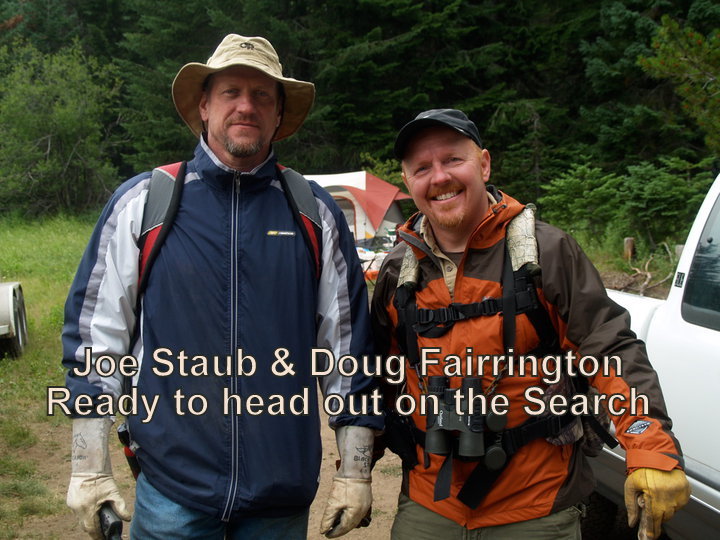
I had planned on going out this past weekend to search for Rainy and was hoping that a few people would jump in and help. All week long at work I stressed about her being up in those mountains alone, or perhaps attacked and eaten by a mountain lion. We put out the all points bulletin during the week and got the help we needed by Friday afternoon. A special thanks to Doug Fairrington, John Staub, Pamella Watson and David Watson. They were all extremely helpful and a delightful group. I know others wanted to help, but where constrained by work and other duties. I thank you all for your consideration!

On Friday afternoon I set up a camp site in the area (zone) where Rainy was lost. It was a meadowy spot just below Palmeteer Point on the old Barlow Road, which the immigrant wagon trains used to cross the mountains in to Oregon's Willamette Valley. A very historic location. I brought several llamas with me, so that if Rainy saw them she might come to them, since llamas are very social creatures. That evening Doug Fairrington joined me at the camp and we ate a very nice dinner before going to bed.

The next day, Saturday, not long after breakfast, my brother John showed up and managed the camp for us. He recently broke his toe and couldn't walk very well, which was actually fortuitous for me, because I needed a good camp manager!

Shortly after Doug and I headed out in to the forest the Watson's showed up and John was able to direct them on their search of an area where Doug and I were not going.

The plan that Doug and I put together involved zig zagging up the valley walls until we got to the top of Palmeteer point, where Rainy took off in to the forest. Our rationale was that we could cover a lot of ground this way and we surmised that she would have filtered down toward the meadow where we were camped. We didn't talk much about it, but we both thought she was probably dead, since no one had seen her after 7 days. In other words, we were looking for a downed llama with it's gear still on her. As we made out way up through the dense forest we realized that locating her would be like finding a needle in a hay stack; the forest was very dense and you could only see for 20 yards in any direction.

After 3 hours of contouring the valley walls we came to a place about 50 yards below Palmeteer Point where I looked down in to the forest and saw one of Rainy's panniers (one of two packs). I was not planning on finding her alive, but I knew that what I saw about 20 yards away was one of her panniers. I called out to Doug, who was 50 yards below me, that I had found a pack. As I walked toward the pannier that I saw, I came upon the other pannier. As Doug moved up the forest toward me he came upon Rainy with the pannier I saw still strapped to her... although I could only see the pannier from my line of sight. Being a dappled llama she was camouflaged and I could only see the pannier. It was an amazing discovery to find her alive! What an adrenaline rush! Rainy acted like she was very content where she was, which was remarkable! She had been without water for at leastd 7 days and all alone with a saddle and pannier strapped to her! The saddle and pannier were actually hanging from her and functioned as a kind of "ball and chain." Perhaps she would have made it down to Barlow Road and the meadow had she not been bound up with this saddle and pack. As we tried to help her, she resisted us. I actually had to get a rope out and corral her. Once we had her leadered and tied to a tree she became very docile and became completely taken up with interested in Doug's water bottle. Doug could see she was thirsty and cut his water bottle open so she could drink and she took his quart down as though it were a mere sip. I put my quart of water in Doug's enlarged bottle and she sucked that down, as well. She had been without water for at least 7 days! It's not uncommon for llamas to not drink for a couple of days, but 7 and perhaps 10 days (I don't know when she drank before the trip) is crazy. But then, llamas are camalids.

Doug was totally amazed by the rescue. He kept repeating to me that he kept praying during the search, "God, you know where she is!" He did and he showed us. In fact, just when we saw her we were going to make a zag in the zig zag and we probably would have missed seeing her. I had been near the very spot we found her a week earlier and had not seen her!


After Doug and I reason out God's providence in this situation, we saddled her, panniered her, and walked her down through the forest to the camp. She was amazing, acting as though nothing had happened to her and not showing any signs of stress; as though she had been on a vacation!

When we got back to the camp John called the Watson's on the walkie talkies to announce the rescue and they headed back to camp to meet us. They were about 2 miles away from camp at the time. As Rainy came in to camp to meet her sister llamas she looked at them, sniffed at a couple of them, bend over, and started eating grass! Not a very exciting home coming! But, as Pamella Watson said, "llamas are like cats."

We all sat around the trailer and enjoyed telling the story her rescue to each other.


MISSING LLAMA FOUND! Rainy was Rescued


Wednesday, July 28, 2010

MISSING LLAMA! Rainy's Lost in the Mount Hood Wilderness (Part II)

THE SEARCH IS ON: I will be camping this Friday afternoon through Sunday afternoon at Devils Half Acre on the old immigrant trail of Barlow Road, so that I can begin another search for Rainy. Here is a picture of Palmeteer Point From Devils Half Acre where I will be camping. I believe Rainy is somewhere within the vicinity of this picture. Palmeteer Point is the high point to the left in this picture. My thought is that it would be natural for her to gravitate down to this meadow, where there is plenty of grazing grass and water.


PICTURE OF PALMETEER POINT WHERE RAINY WAS LOST: This picture below includes Cher and Fancy Pants on top of Palmeteer Point about the time when Rainy took off in to the forest. It was a beautiful day, even though it was hot. One theory I have is that she was delirious from the heat and lost her awareness of reality. The climb up was arduous and I don't think any of us, man or beast, was prepared for the 90+ temperatures we experienced that day. Normally, Rainy would have stayed on the trail and followed the other llamas, even if she lost sight of them.


HOW TO FIND THE SEARCH CAMP: Devils Half Acre Camp Ground can be easily accessed at Barlow Pass just off of highway 35 (it is also where the Pacific Crest Trail crosses highway 35 and there are signs to designate the trail crossing). Once you make the turn in to the Barlow/PCT turn out you will take the Barlow Road down about a mile and a half to Devils Half Acre. It's a dirt road, but if you go slow most any vehicle can make it. I will be camped right off the Barlow Road. If you come, just look for the burgundy Chevy pickup with a white stock trailer right off the Barlow Road around the Devils Half Acre Camp/Meadow. If you want to help with the search, the best time to come would be any time between Saturday morning and Sunday afternoon. I'll have food and drinks for everyone who shows up to help. But, by all means, please call me before Friday afternoon to let me know, which would help my planning. My cell phone number is: 503-816-4415. But, if you want to just show up, that's OK, too.

Monday, July 26, 2010

MISSING LLAMA! Rainy's Lost in the Mount Hood Wilderness (Part I)

WHAT HAPPENED? This past Saturday Pam and I went llama packing in the Mount Hood wilderness, just off the Pacific Crest Trail near Barlow Pass, when we lost one of our llamas to the forest (see picture below of our lost llama, Rainy). We were ascending a view point called, Palmeteer Point, about 2.5 miles from Barlow Pass (See the Map Below), when Rainy lost sight of our pack train, veered off the trail and headed in to the forest. We didn't know that Rainy was lost until two young ladies, who were up on the point ahead of us, asked us when we got to the top of the point, "are there other llamas up here besides yours? Because we just saw a llama with a green pack and axe making her own trail straight down in to the forest." When I heard them describe the llama I knew it was Rainy and I dashed down the point to try and catch up to her, but she vanished in to the forest before I could find her.


HOW DID IT HAPPEN? An hour before she disappeared, about half way to Palmeteer Point, I had disconnected Rainy's leader from our other three llamas because she was starting to straggle and restrict the pace of the pack team. It has been my practice with Rainy to untether her when she gets like that on the trail and let her bring up the rear. It seems to help her get motivated when she is behind the others; having to catch up. Of course, we always made sure she stayed within eye shot of the other llamas ahead of her. However, on this occasion we were ascending a tiered incline just below the point and on one of the tiers she must have lost sight of us. Perhaps she thought we went in another direction? Perhaps she became delirious from the heat? Perhaps she simply refused to go up hill any longer? We went back to where we last saw her and I found her tracks where she veered off the trail and followed them as far as I could. The tracks led around the point, where the girls saw her, and then down in to the densely canopied forest. Palmeteer Point drops steeply down to the old Barlow Immigrant Road and is heavily forested all the way down. But, once I got in to the canopy just below the point I could not see her tracks any longer. The forest litter was so heavy that her hoof prints couldn't indent the turf enough to be seen. If it had been the rainy season I am sure she would have left far more hoof depressions on the ground and other ground signs. I spent about 45 minutes looking around, but since Pam and I were alone with three other llamas, we decided to go back to the trail head, hoping that she would double back to our starting point, like many stock animals do. When we got back we didn't see her. I then walked down the old Barlow Road for two miles until I reached the point on the road which is just below Palmeteer Point. Again, no signs along the road. When I got back to the Pacific Crest Trail head we packed up and left for the Ranger Station to make our report, but they were closed by that time. We then made a plan to return the next day to look for her.

I talked to one of my friends, Matthew Lee, who volunteered to come with me and Pam to search for her on Sunday morning. We made up a flyer with Rainy's picture on it, that said, "MISSING LLAMA" and other contact information. I provided enough information that someone could identify her and contact me if found. On our way up Sunday we stopped at the Ranger station at ZigZag to make our report and leave a flyer with them. Then we placed flyers at trail heads in the area, as well as on the Barlow Road.

THE NEXT STEP: I plan on returning Friday after work to spend the weekend hiking and camping looking for her, unless someone finds her between now and then.

Saturday, November 28, 2009

Meet Our New Male Cria!


This is our new llama cria that was born a few weeks ago. We just took these pictures today, but you can see birthing pictures in the slide show in the right hand column. Artemis is our first male cria since Columbus, who we lost over a year ago to a tragic accident. We've had several females born since Columbus and we like the females because they become breeders. However, the males are just as important, because they become the gelded packers that we are trying to breed. The strategy is that you keep the ladies bare foot and pregnant and the males on the trail doing all the packing. It turns out that Artemis is the name of a female godess; the daughter of Zeus. Looks like we might have to change his name. Or, perhaps Artie will do? This little guy was actually an unexpected and pleasant surprise. We did not purposely breed his mother, Rainy. And, the very day he was born the vet did a herd check on my llamas and he didn't even notice she was pregnant! Within just a few hours after he left she delivered. It turns out that Pam was heading out to round up some loose llamas when Rainy was lying down giving birth. The little guy didn't want to come out, so Pam gave him a little help by pulling on his legs! (see the pics in the slide show) So far, little Artie is looking like a great prospect for a packer. We won't really know for a year or so, but we like what we see, so far!